Every dollar you allocate before the show doors open determines the quality of the buyers you attract. Whether you are sourcing new suppliers or launching products to the North American market, your trade show budget must account for more than just square footage. This guide breaks down the real costs of exhibiting in the U.S. and shows you how to structure spending that delivers qualified leads.
The Three Non-Negotiable Pillars of Your Trade Show Budget
When procurement managers review their post-show performance, the ones with profitable outcomes started with a clear financial structure. Your budget must be built on three foundational layers: securing visibility, getting your materials onsite, and engaging the right audience.
1. Space Investment and Location Strategy
Your exhibit space rental is the largest fixed cost, but the price you pay for a standard 10x10 booth rarely guarantees traffic. In major U.S. venues like Las Vegas Convention Center or Chicago's McCormick Place, corner booths or positions near international pavilions command premiums of 20–30%.
If your target is North American buyers, allocating additional budget for a corner or peninsula position (two or three open sides) directly increases foot traffic. Review the floor plan early and identify high-traffic zones—near restrooms, food courts, or seminar stages. These locations reduce the need for aggressive marketing spend later because booth visibility does the initial work for you.
2. Logistics and Material Handling
International exhibitors often underestimate U.S. labor costs. Your trade show budget must include:
Freight and drayage: Shipping custom exhibition stands or crates to the show site, plus union-mandated handling from dock to booth.
Material handling fees: Many venues charge per pound for moving boxes and crates.
Storage: If your exhibit signage or product samples arrive early, warehouses charge daily fees.
To control these costs, work with a partner familiar with U.S. venue regulations. Companies like NORDER, with localized production facilities in Las Vegas, allow you to fabricate booth fabrication elements domestically, reducing transoceanic shipping expenses and eliminating international freight delays.
3. On-Site Engagement and Marketing
Once buyers are walking the aisle, your trade show budget must fund the tools that capture their attention. This includes:
Lead retrieval hardware: Tablets and badge scanners to capture buyer data instantly.
Hospitality: If you plan to host key clients for dinner or coffee meetings, allocate funds separately from booth costs.
Giveaways: Procurement professionals remember useful, high-quality branded items—not cheap trinkets.
A well-funded engagement plan ensures you convert foot traffic into qualified leads that your sales team can follow up with post-show.
Booth Design and Construction: Where Your Brand Meets Buyers
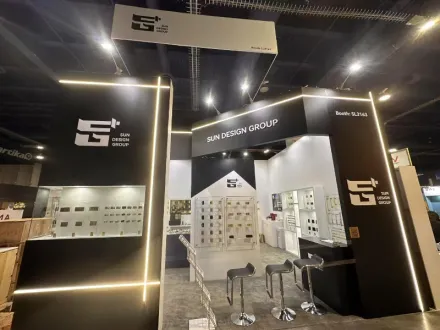
Your booth is the physical representation of your company. For B2B buyers walking the floor, a professional custom exhibition stand signals reliability and quality. When building this section of your budget, consider both aesthetics and functionality.
Custom vs Modular: Making the Right Choice
Many first-time exhibitors assume custom means expensive. However, a bespoke exhibition stand designed for reuse across multiple shows offers better long-term value than renting generic structures repeatedly.
NORDER, with over a decade of experience in U.S. exhibition booth design, offers both custom and modular solutions fabricated locally. Their team handles everything from 3D visualization to on-site installation, ensuring your trade show booth fabrication meets U.S. safety standards and venue deadlines. By working with a single provider for design, construction, and dismantling, you eliminate vendor coordination costs and reduce the risk of installation delays.
Cost Breakdown for Booth Construction
| Component | Typical Budget Allocation | Notes |
|---|
| Structural framework | 30–40% of booth budget | Includes walls, flooring, ceilings |
| Graphics and signage | 15–20% | High-resolution prints, branded exhibit signage |
| Lighting and AV | 10–15% | LED lighting, screens for product demos |
| Furnishings | 10–15% | Meeting tables, storage cabinets, seating |
| Installation and dismantling | 10–15% | Union labor, on-site supervision |
If your custom exhibition stand includes interactive elements like touchscreens or product demonstration zones, allocate an additional 5–10% for technical integration and on-site tech support.
Staffing Your Booth: The Human Element
Your team is the most expensive daily operating cost, but also your highest-ROI asset. A poorly trained or exhausted staff repels buyers. Your trade show budget must prioritize their preparation and well-being.
Travel and Accommodation Planning
For shows in Las Vegas, Orlando, or New York, hotel rates surge during event weeks. Book rooms within the official show block early to secure reasonable rates. Factor in:
Flights and ground transportation
Per diem meals (union venues often have limited, expensive food options)
Incidentals and tips
If you are flying a team from overseas, consider arriving a day early for on-site training and venue familiarization. This small marketing expense ensures your staff understands the booth layout and lead capture process before the doors open.
Staff Training and Appearance
Allocate budget for a pre-show team dinner or meeting to align on messaging. Your staff should know:
How to qualify a buyer quickly (distributor vs. end-user)
The top three product features to highlight
How to use lead retrieval apps to scan badges and record notes
Branded attire—professional polos, blazers, or vests—keeps your team approachable while reinforcing your identity. Avoid suits that can feel intimidating to buyers in casual industry environments.

Comments
All Comments (0)